Funnels lie about gravity
If you read that headline as me hating funnels, you’ve got me wrong.
Funnels are the ultimate growth framework. In one image you can see where every user sits in the journey, and their position tells you where you’re trying to take them next. That “where they are, where they’re going” pairing is what separates a funnel from every flatter way of looking at your metrics.
So what’s wrong with them?
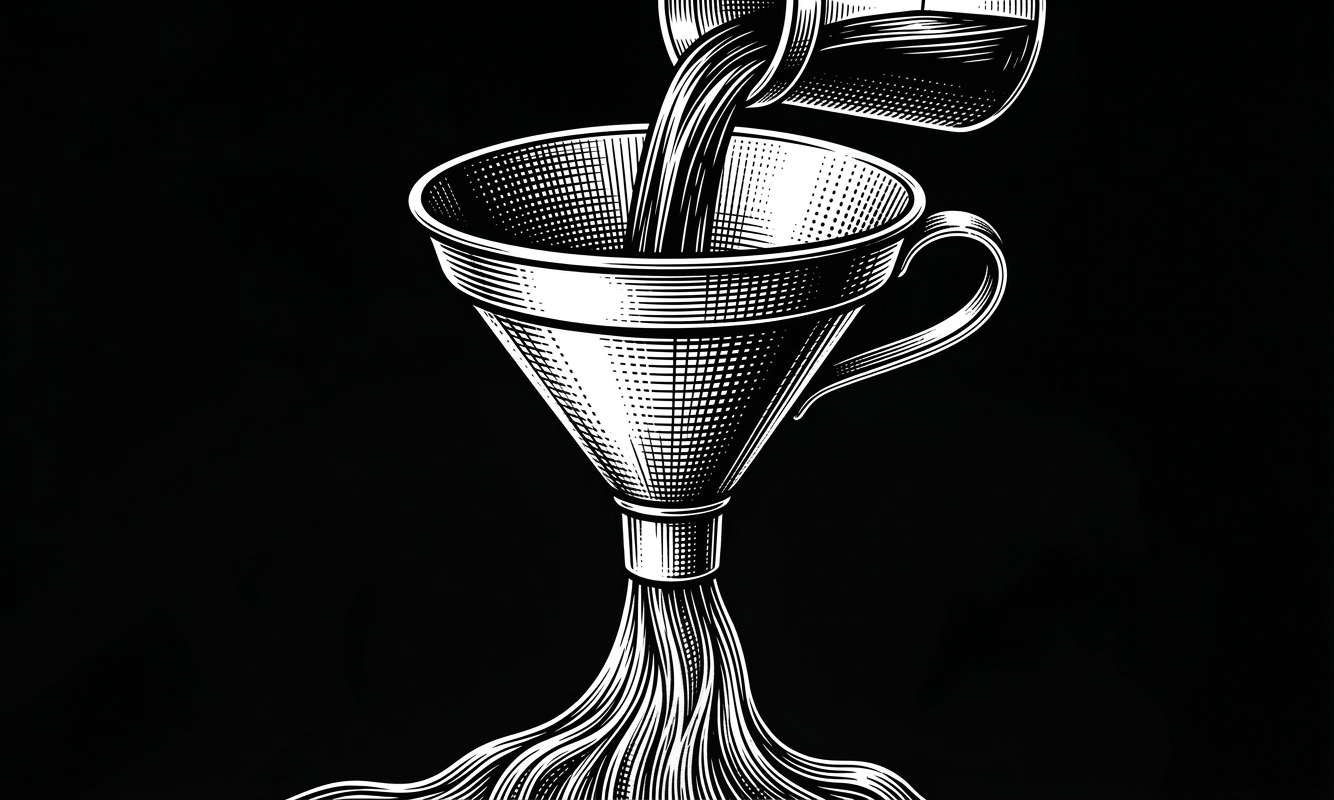
Funnels imply gravity is on your side
My complaint is pedantic. I’ll apologize in advance.
Visually, a funnel says: get a user in the top and, given enough time, they’ll work their way down to conversion. Downhill. Automatic.
You hear it most clearly from non-growth leaders: “We’re filling the funnel but we’re not getting the sales we want.”
The dangerous part isn’t the disappointment. It’s that no diagnosis follows. The read becomes “our efforts aren’t working” instead of “here’s the specific step that is working and here’s the one that isn’t.”

A better picture: the terraced mountain
Your job is to get water to the top of the mountain.
Picture terraced rice paddies with stepped fields cut into a hillside Each layer holds water.
If gravity has its way, that water rolls straight back to the bottom. The only way to move it up is to run pumps. Pumps need energy: your effort, your budget, your team’s focus.
What terraces buy you that a funnel doesn’t
A funnel is one chute and everyone falls through it the same way. A mountain has faces, and three useful things follow from that.
Terraces hold water. A funnel measures flow: how many people moved this month. A terrace measures volume*: how much you’re holding right now and how fast it’s draining*. In a funnel, drop-off looks like people who simply never converted. On a mountain it looks like a leak, and a leak has a location you can go patch.
Pumps don’t have to be adjacent. Nothing says a user climbs one terrace at a time. A good referral can drop someone three terraces up the mountain on day one. A funnel has no way to draw that.
Different segments climb different faces. Your enterprise buyers and your self-serve users do not share a terrace layout. Stop forcing them down the same chute and calling the blended number a conversion rate.
How to actually run this
- Draw your terraces as states, not stages. “Has done X and is sitting here,” not “step 4 of 6.”
- Get two numbers per terrace: how much you’re holding, and the leak rate.
- Patch leaks before you add pumps. Energy poured into a leaking terrace is energy on the floor. This is almost always the cheapest growth available to you.
- Name every pump: the intervention, the energy it costs, the water it moved.
- Rank pumps by water moved per unit of energy. That ranking is your roadmap.
Measure the pumps hello, experiments 😉
Don’t wait for a funnel to converge on its own. Unconfined water is still fighting to roll back down the mountain.